Books & Words to Inspire

Blog

Understanding Scripture in Light of a Jewish Timeline

Posts tagged Garments
Deeper Meaning of the Tabernacle: Garments

The garments of the priests who served in ministry of the tabernacle were of fine white linen. This represented holiness, purity, and righteousness—traits that were necessary in serving in the presence of a holy God. They wore linen trousers, going from waist to thighs, to ensure their nakedness was covered, a tunic over this that went to their ankles, and a turban on their heads, but cone shaped. The only color worn was the sash that went around their waists composed of the same material as that of the veil of the temple: blue, purple, and scarlet yarn, and white twisted linen. This represented for whom they served in purity and holiness.

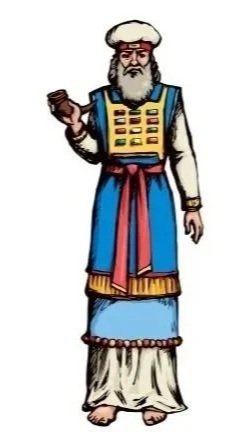
The high priest had even more elaborate vestments. Over the white tunic was one of blue color with pomegranates of blue, purple, and scarlet yarn and finely twisted linen around its hem. Golden bells were placed between each pomegranate. Some say the bells helped the other priests to know the high priest was well when in the Holy of Holies as they feared a potential fatal incident similar to that of Nadab and Abihu where God struck them dead due their impropriety of offering unsanctioned fire in their censors (Lv 10:1-3).

Over the blue tunic was the ephod made of threads of pure gold, of blue, purple, and scarlet yarn, and of finely twisted linen. It was made of two pieces (front and back) which were attached at the shoulders with two onyx stones with the names of the tribes of Israel (six on each stone in birthright order) engraved into them and set into a gold setting. This represented the high priest’s responsibility of bearing all of Israel on his shoulders before the LORD. A waistband made of the same material as the ephod was placed around his waist.

On top of the ephod was placed a breastplate made of the same material as the ephod. Onto this was mounted twelve precious stones in four rows of three and placed in golden settings. The name of a tribe of Israel was engraved onto each stone. It is thought that the color of each precious stone reflected the color of the flag (banner or standard) that each tribe possessed (Nu 1:52). The Temple Institute believes the stones and their colors were as follows (Tabernacle):

First row of stones: agate for the tribe of Levi (color: red, white, and black stripes); jade for the tribe of Simeon (color: green); ruby for the tribe of Reuben (color: red);

Second row of stones: quartz for the tribe of Zebulon (color: clear); lapis-lazuli for the tribe of Issachar (color: blue); carbuncle for the tribe of Judah (color: bluish green);

Third Row: agate for the tribe of Gad (color: grey); amethyst for the tribe of Naphtali (color: purple); turquoise for the tribe of Dan (color: blue);

Fourth Row: opal for the tribe of Benjamin (color: all colors); onyx for the tribe of Joseph (color: black); aquamarine for the tribe of Asher (color: blue green).

This breastplate was attached to the ephod with gold chains at its corner and tied to the seam of the ephod just above the waistband to keep it from swinging out from the ephod. This formed a type of pouch in which the Urim and Thummim were kept. It is unclear what these were but are thought to be two stones (one white, one black) to indicate a yes/no answer to questions that the high priest would bring before the LORD.

The high priest wore a turban like those of the other priests but also had a band of pure gold around it, attached with a blue cord, with the words Holy to the Lord engraved on it.

When dedicated to service, Moses placed blood on the lobes of their right ears, on their right thumbs, and on their right big toes (Ex 29:19-21). This was indicative of them dedicating their service to the LORD: hearing and obeying God’s laws, their actions being according to the law as directed by God, and them walking in the ways of the law as God ordained.

The vestments for the high priest were different and more elaborate than that of the other priests for several reasons. One, they show his role as being different, and more strategic, than that of the other priests. It revealed to everyone that he was the mediator between the people and their holy God and the precious stones showed that he bore their needs and their very lives before him and represented them to God and that they, too, were precious to God. The blue robe revealed his role was a heavenly one even though he was on the earth. The pomegranates represented prosperity which he wore before the Lord as his actions were for the betterment of the people he served. The bells, as previously stated, was so the other priests could hear him in the Holy of Holies and know that all was well as they could not enter this part of the tabernacle themselves. All this also pointed to the coming of their Messiah who would become the ultimate mediator between them and God and is the role that Jesus Christ serves for us today (Hb 4:15-16; 9:11-12).

As we can see, every aspect of tabernacle worship pointed to their future hope of their coming Messiah (Jn 1:14) who would be their savior and the one to bring them back to their fellowship with God himself. Today, we can look back at how these elements pointed to Jesus Christ and his death, burial, and resurrection. He had taken our sins (1Pt 2:24) and has enabled a way for us to be right with God again and will allow us to one day be in his presence forever (Jn 14:3). Now isn’t that worth a hearty, Amen!?