Are Readers Wary about Christian Fiction?

Star Field in Deep Space
The genre of Christian fiction is probably a more difficult niche of literature than other genres. Why? Well, not only do authors of Chrisitan fiction experience the same challenges and roadblocks authors of other niche genre authors face but must also compete within this specialized niche genre. What do I mean? Let me try and explain.
There are all types of niche genres across the fiction literature spectrum. Yet, typically, in most niche genres, fans know what to expect from a book in that genre. While, yes, there are variances in the plot and types of characters within these stories, for the most part, reader expectations are met. For example, in Amish romance, fans are pretty sure what they will get when they select a book in that niche genre. But not necessarily true for Christian fiction. Probably because other niche genre categories do not touch one’s very core existence as does Christian fiction literature. People are very protective of their view of God, how he works, and how he influences people. One can’t really tell what theological viewpoint will be included in a Christian fiction book just by its title while one can typically do so for other niche genres. If not by the title, by the subtitle or the book cover artwork.
Also, Christian fiction can be an overlay to almost any other literature genre. Christian elements about faith, forgiveness, divine intervention, and the importance of prayer are typically added into the plot of the storyline. These topics can become very personal for individuals and may not agree with the authors view of how God intervenes in our daily lives. So, this can make this niche sub-genre more difficult for authors to obtain a devoted fan base than is possible for those same genres without the Christian view overlay. I think this is even truer when we get to sub-genres of Christian Science Fiction and Christian Speculative Fiction, especially when these sub-genres deal with end time prophecy. One’s view of how God will intervene in human affairs from a prophetic standpoint can become even more divisive.
When one looks at end-time prophecy, I have found that the main controversy is not about the assurance of a return of a Messiah, but how and when that will occur. It seems the main divisive factor is when God’s wrath will occur and how this term is defined. The idyllic event that will transpire once God’s wrath is concluded does not seem to be controversial. If these views of God’s wrath are understood and unified, most end time views begin to coalesce (see Rapture-Receiving of the Bride).
At the same time, many do not really understand what will occur after this event. It seems that so much effort has been placed into trying to understand when it will occur rather than on what occurs. I thereby wrote a series that helps readers understand the possibilities of what their future may entail as seen through the eyes of individuals that are living through this time of our future history. This is something that should not be controversial as its legitimacy is not the controversy, but when it occurs. God has stated that the future he will provide will be far greater than we can conceive. Therefore, if I can help others conceive how great this time could be, it will hopefully stir people to understand that it will be even far greater than any author could conceive it—even if that conception proves wonderful.
My hope is that my series, Stele Prophecy Pentalogy, will get people excited about their future and see how great and good God truly is. This will also help readers understand at least some of the aspects about this time in our future history that the Bible tells us about. In Mercy of the Iron Scepter, we are introduced to a subculture during this time of wonderment that is against what our coming Messiah is all about revealing it is our own innate will that goes against God’s will for us rather than our adversary, Satan, himself. He only uses our propensity against us but not create that propensity within us. This book starts well into this future time period and goes until our adversary, Satan, and his influence is finally removed forever. This series then goes back to how this future time period begins in Promised Kingdom. The next book of the series, Hope Renewed, illustrates how and why a sacrificial system will again be established as we look at this aspect through the eyes of the first priest born into this kingdom established by our returning Messiah. Next, through the next novel in the series, Darkness in the Light, we are introduced to the reason and need for a Prince who will lead the world in worship of our Messiah and see this through the eyes of the prince’s youngest daughter. To complete the series, we are introduced to one of the key antagonists through the book, Iron in the Scepter, who is against the Messiah, the King, and the reason she feels this way and the errors of her way in this regard are exposed. Her story then leads right back into the first book of the series.
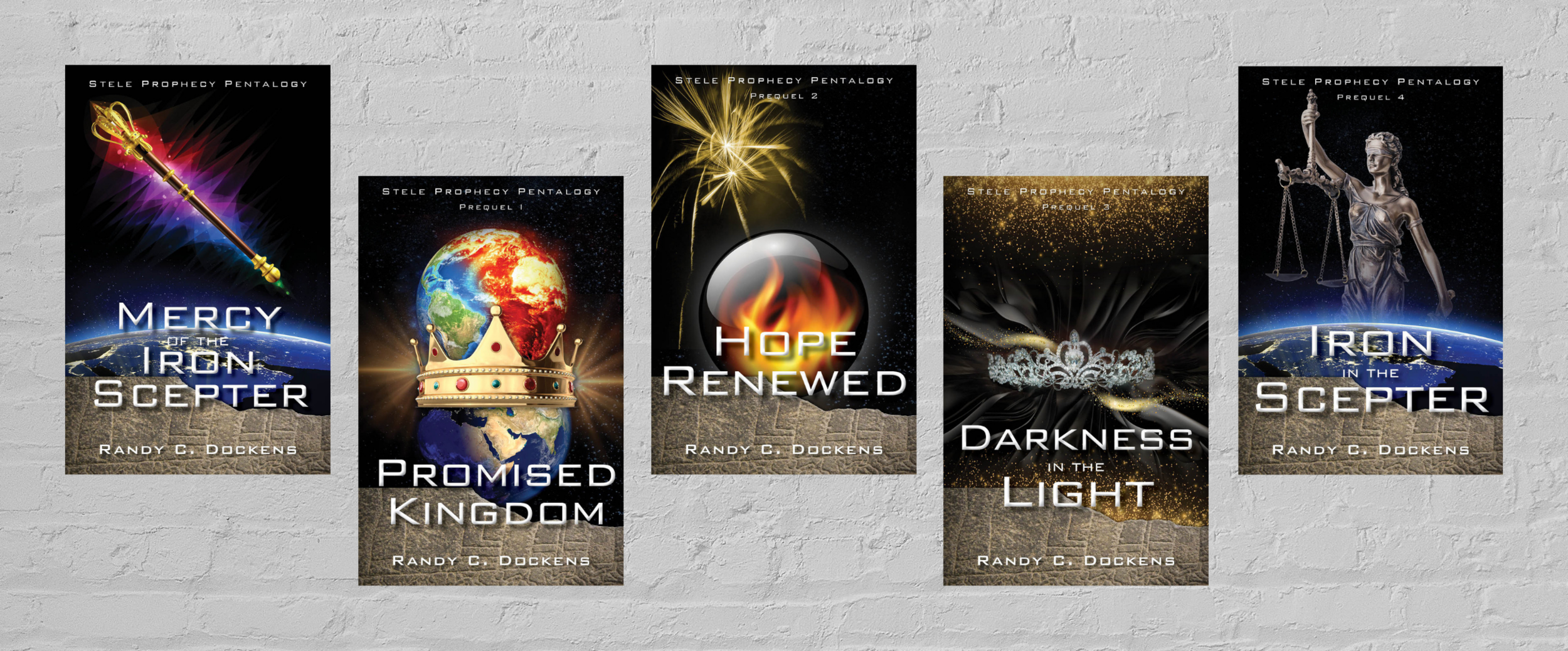
Stele Prophecy Pentalogy by Author Randy C. Dockens
Christian Science Fiction or Christian Speculative Fiction can be rewarding for readers who are willing to take the chance and the time to explore this sub-genre of Christian Fiction.
____________
Visit Books & Words to Inspire by Randy C. Dockens