Is Artificial Intelligence Still Science Fiction?
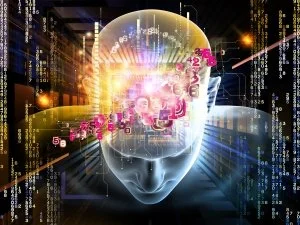
Mind Over Number
For decades, or maybe even longer, artificial intelligence (AI) has been the subject of many science fiction novels to show how positive such a technology can be, as well as how evil such a technology can cause society. While the pros and cons of AI have continued to be discussed over the years, this has not slowed the advancement of this technology. Today, AI is upon us, and we are now at a time when we must not only contemplate these pros and cons, we must grapple with the reality that these issues cannot only occur but will, and are, occurring.
What are these pros and cons? There are several. Let’s look at them briefly. These are not all inclusive and do not go into great detail here. AI has the capability to make life easier and more convenient for society by automating routine tasks. Often, accidents and injuries come from people doing routine tasks over long periods of time. AI allows complicated tasks to become routine and more manageable because AI can make complicated computations in real time with a significantly low error rate. AI can do many of these tasks more safely and do dangerous activities which cause humans a high risk of injury. Of course, the fear of using AI for this advantage is that many jobs for humans are then replaced by machines. While this is true, it also creates jobs that did not exist before AI took over these routine tasks.
Because of AI being able to do complicated computations in real time, this gives the advantage to many scientific fields of study. In healthcare, it can aid in diagnosing diseases and identifying maladies much earlier and more successfully than without it. AI can aid those with disabilities by providing improved prosthetics, transcribe conversations more rapidly for the hearing impaired, and even integrate neuronal impulses to prosthetics. There are many powerful things AI can do that have not yet been discovered.
These are the positive sides of AI that authors can utilize and expand upon to make AI enhance their stories and make things that are not currently possible, seem possible in their stories because of what we know AI has done for us now and in the past. Yet, there are negative sides to AI that we need to also realize, be concerned about, and consider how to reduce the misuse of such capabilities.
AI can be utilized to distribute misinformation and biases. After all, AI is a set of algorithms which are programmed by humans through which human bias enters AI technology. This is likely one of the reasons that not all AI programs are created equal and do not always arrive at the same conclusions of the question asked of it. This is problematic because most people will rely upon the output of AI technology without questioning the bias of that output. Perhaps one of the biggest fears of AI, and with good reason, is that AI can pose privacy risks. It is not so much AI technology itself that is the problem, but what humans themselves want to do with the data such AI technology generates or can generate.
It is these negative sides of AI that authors have utilized the most to place into their stories to make a contrast between good and evil, between humans and machine, and create tension in their stories to make them dramatic, perilous, and as a way to create a hero.
So, back to the original question. With the advancement of AI in our current lives and how fast it is developing, can we still classify it as science fiction? I think the answer is yes because we have just begun to scratch the surface of what AI can do—both positively and negatively. I think science fiction authors will help to advance AI because it is through their imagination and their writings new ideas will be generated, and the informational and technological ceiling that seems to be in place currently will be shattered and lead to even greater revelations and the fulfillment of them.
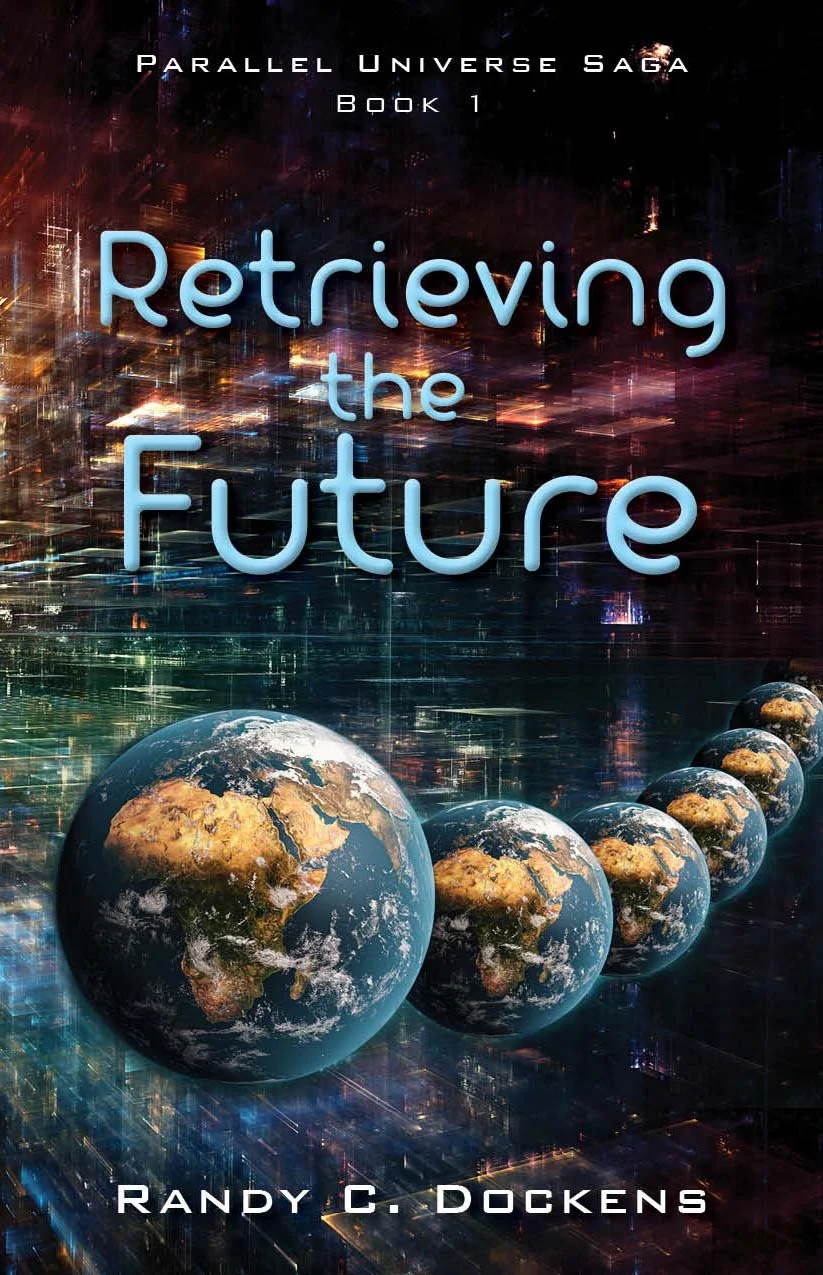
Book 1 of Parallel Universe Saga by Author Randy C. Dockens
The misinformation and bias in AI are two of the themes of my series, Parallel Universe Saga. In this series, an advanced AI is placed within a humanoid-looking android so he can not only act human but also look human. The AI would need to start as a series of algorithms coded by humans but would also be able to refine and create code itself to improve its actions and abilities. Yet, such code could only be self-written within the parameters it was first programmed with by humans This creates bias. But the thought here was the question: what would happen if the AI had access to all information from all libraries and databases on Earth? Would there be bias or would an AI which can compute and compare all data of a subject simultaneously yield to a more unbiased view of our world? Would such a system be able to see how God would need to be part of our view and understanding of all things? Well, if truth reveals itself with uncensored data, then that is likely the outcome, in my opinion at least.
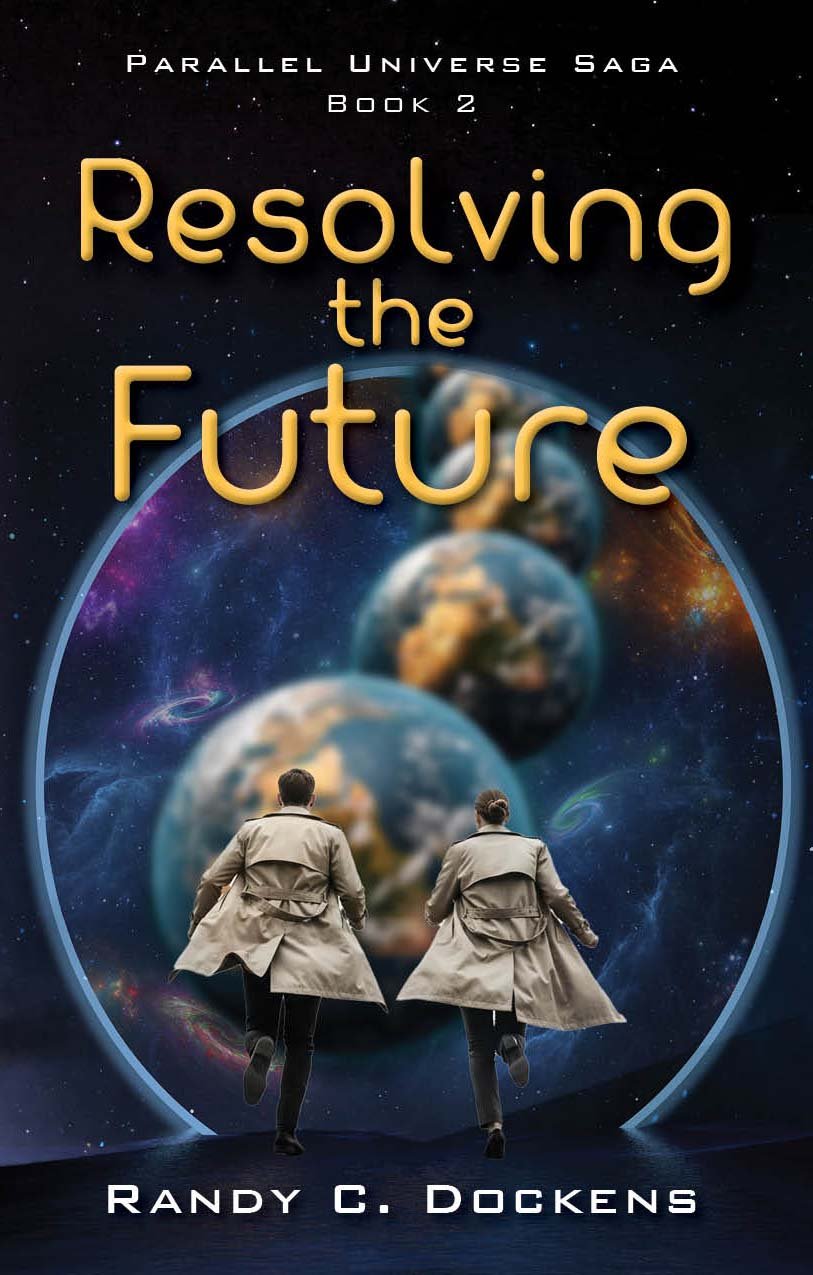
Book 2 of Parallel Universe Saga by Author Randy C. Dockens
This is likely one of the variables we will need to grapple with as the programming of AI and the use of AI becomes our reality. How do we as humans prevent human bias from the programming of a machine with artificial intelligence capability? This can also be a topic for many science fiction authors to grapple with as well and utilize in their stories to make novels that will continue to expand our human understanding of this technology and still entertain audiences at the same time.
___________
Visit Books & Words to Inspire by Randy C. Dockens