Biblical View of the Animal Kingdom
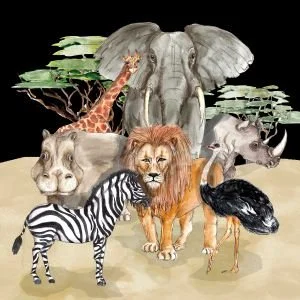
Safari African animals portrait watercolor illustration
God created all animals on the fifth and sixth day of Creation in Genesis with fish and flying creatures created on day five (Gn 1:20-23), and livestock, wild animals, and all creatures that move along the ground on the sixth day (Gn 1:24-25). This seems to have been a very diverse kingdom of animals and God told Adam and Eve to rule over all of them (Gn 1:26) and added later to “subdue” the earth (Gn 1:28). These commands did two things: revealed that God intended for mankind to be greater and more important than all the other animals of nature and that mankind was to be a good steward of the animals God entrusted to them. While humans could bend the will of animals to be useful to him (e.g., tame wild horses to help plant, collect wool from sheep for clothing, or domesticate other animals for companionship), this did not mean he should abuse them just because he could.
When God had all the living creatures pass before Adam so he could name them, Adam realized that each animal kind had a mate, but there was no mate for him (Gn 2:20). God then created Eve who was made to be a helper and mate for him and who became “one flesh” with him (Gn 2:24).
It seems that Satan then used the diversity that God had made in the animal kingdom against Adam and Eve. He chose a serpent who was considered a very cunning creature (Gn 3:1) and able to speak to deceive Eve and have her eat of the forbidden fruit of the Tree of Knowledge of Good and Evil and she gave this fruit to her husband, Adam, who also ate it (Gn 3:6-7). As we mentioned in the previous post, this is how Satan stole Adam’s kingdom from him.
It seems this is not the only time Satan worked against the Animal Kingdom. While Scripture refers to the Nephilim which is how Satan corrupted the DNA of most of the human race except for Noah (Gn 6:9), Scripture seems to imply this was going on with the animal kingdom as well (Gn 6:7). This is in alignment with the pseudepigraphal book of Enoch which goes into more detail that does the book of Genesis about this phenomenon. God then sent a world-wide flood to destroy all humans, land animals, and birds (Gn 7:11) except for those animals God had brought upon the ark so they could repopulate the earth once the flood subsided (Gn 8:17).
Prior to the flood, it seems Adam and Eve, and their descendants, were allowed to eat only plants and fruit (Gn 2:16-17), but God allowed humans to eat animal flesh post-flood (Gn 9:3). Yet, it may be that under the leadership of the Nephilim, animals may have been taught to eat other animals and man may have done the same, because Scripture states “the earth is filled with violence” and mankind “had corrupted their ways” (Gn 6:11-12).
Later, when God set the descendants of Israel apart from other nations so they could represent him before other nations and be a type of priest for him to the other nations (Ex 19:5-6), he restricted their diet to certain foods so that they would be different from other nations (Lv 11).
It appears our diet in Christ’s Millennial Kingdom may become more vegetarian than it is now, but not entirely. We know that the predatory nature of animals will no longer exist (Is 11:6-9) and all nature will live together in peace. However, we do know that fish will be part of the human diet (Ek 47:1-12). Yet, it is not as clear about humans eating other types of meat during this time period. While Scripture does tell us that humans will have vast herds of sheep and oxen (Ps 144:12-15; Is 61:4-6), it doesn’t specifically state that we will eat their flesh or if we will just utilize them for their wool and/or dairy products. Either way, it will be idyllic and we will have no want—neither animal nor human. What a glorious future awaits us!
____________
Visit Books & Words to Inspire by Randy C. Dockens